
Cart is empty
Sebastian Leniak


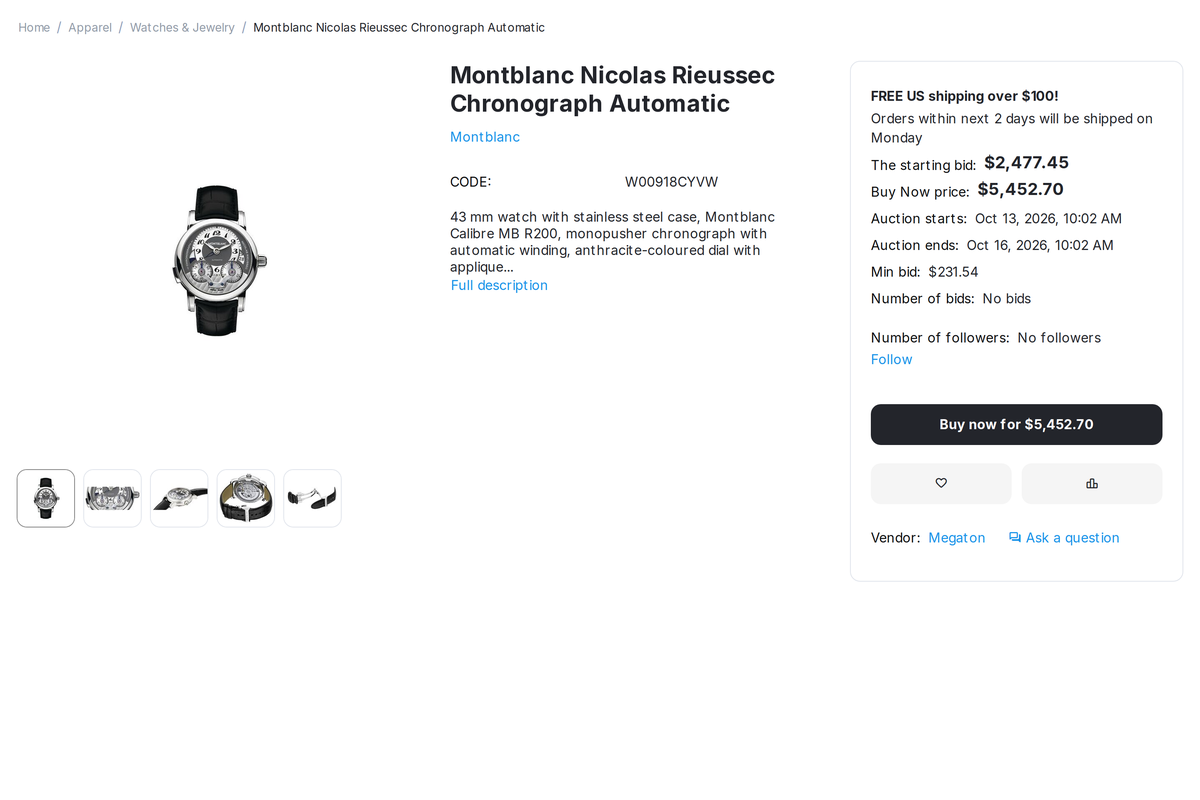
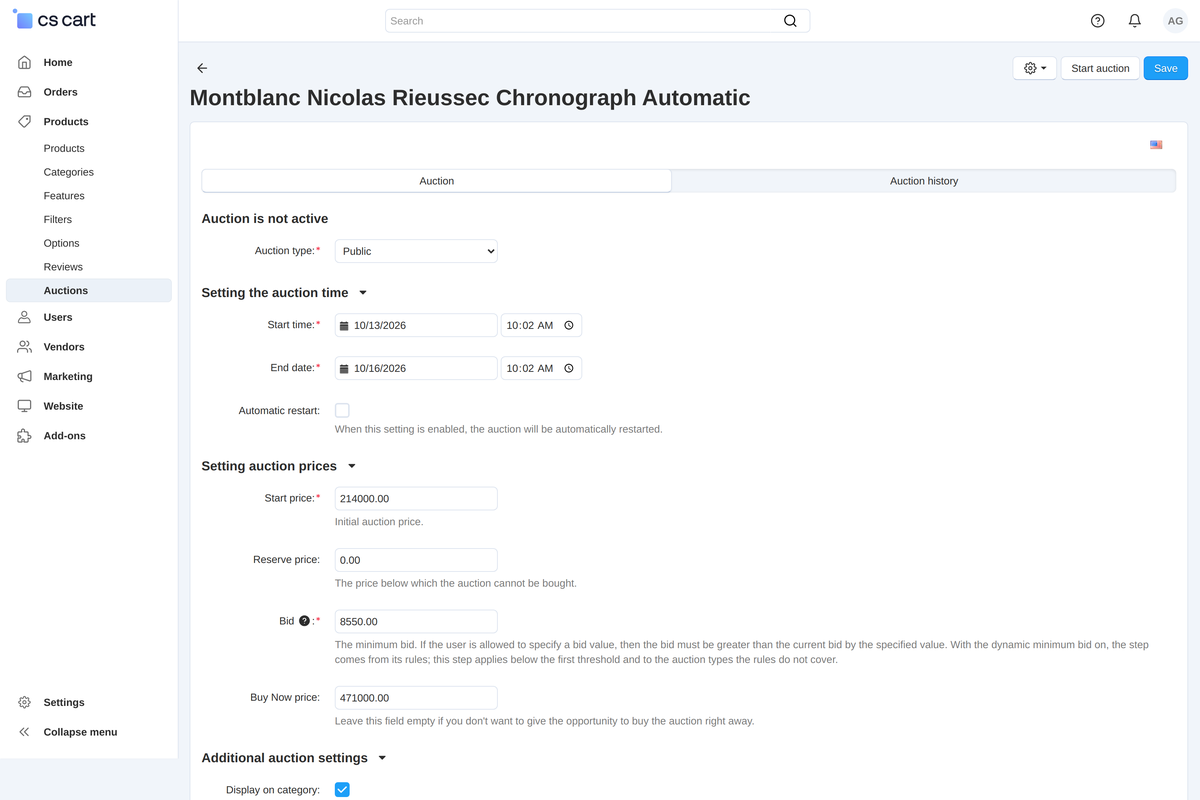
A rare item, a collectible or the rest of a batch is not always worth the catalog price. The add-on puts a product up for auction: customers place bids, an automatic bid bids for them, and the winner gets a payment link. Auctions start and end on schedule, run by cron.
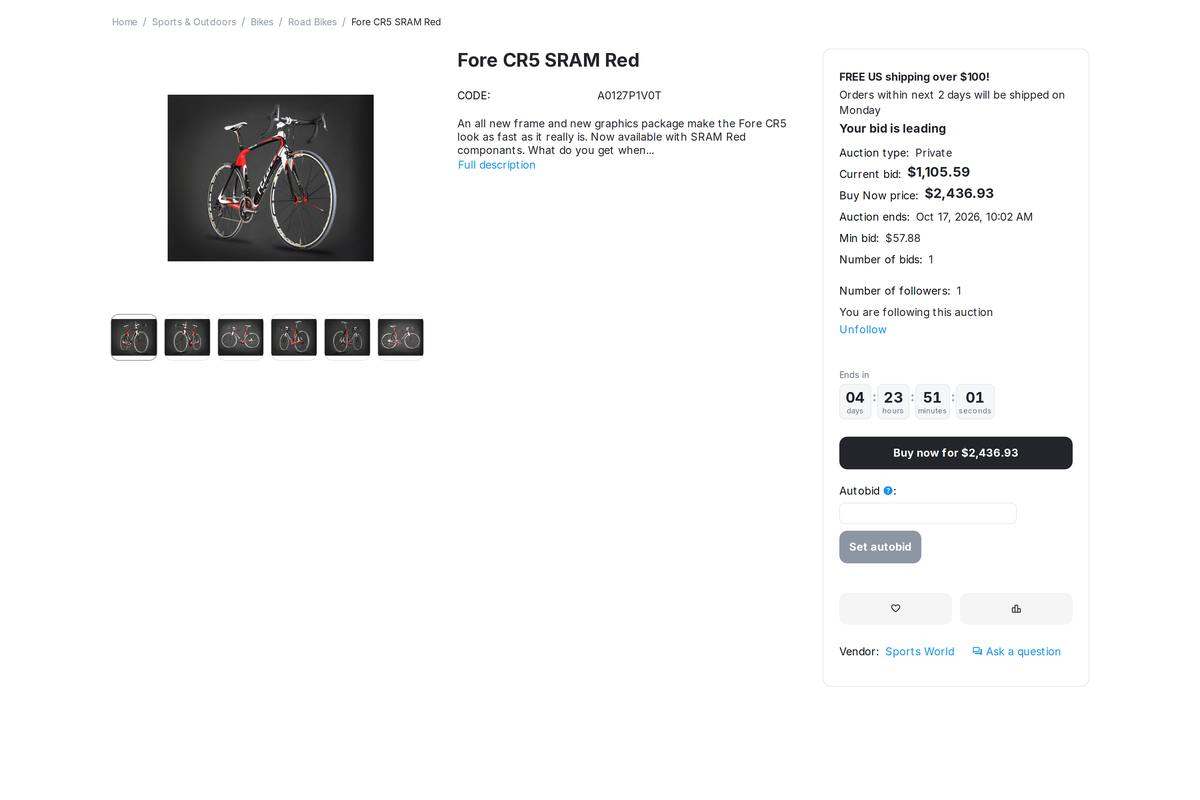
Automatic bid the customer sets a maximum, and the add-on bids one step above the rival
|
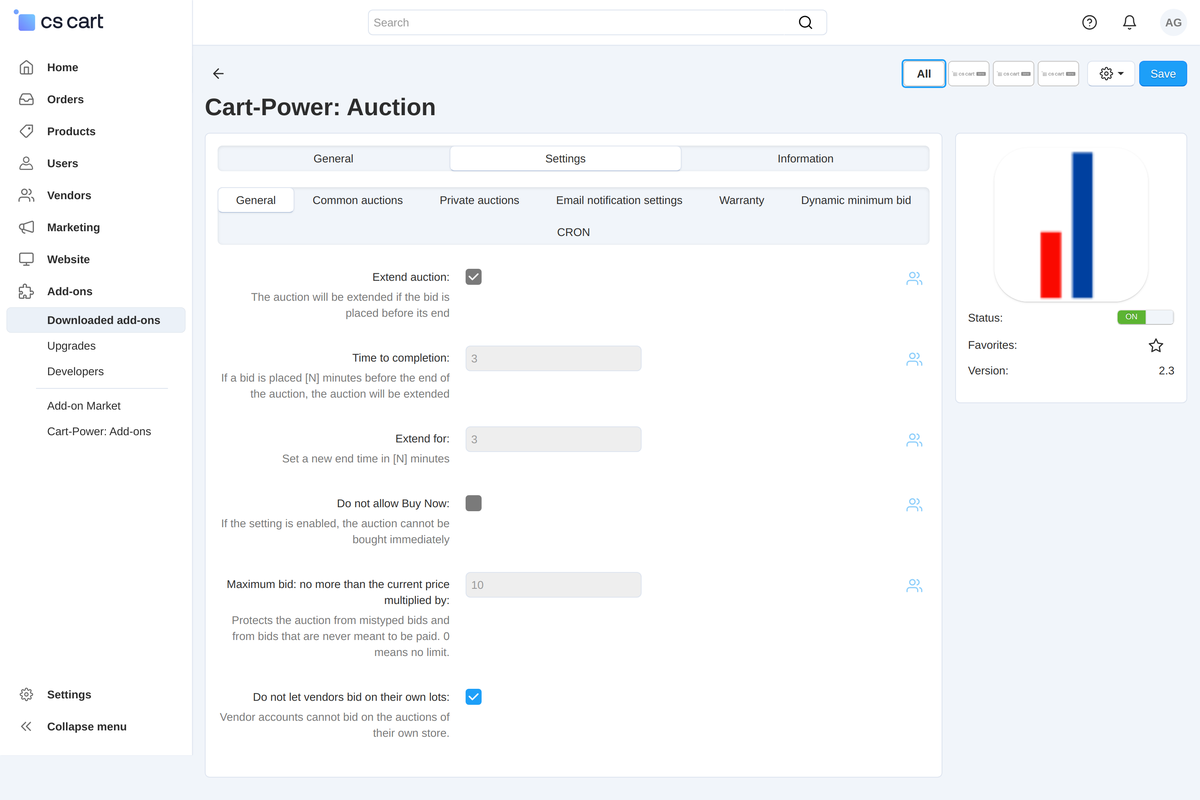
Extended bidding a bid in the last minutes extends the auction, so rivals have time to answer
|
Buy now and a reserve price: the lot can be bought at once or not sold below a minimum
|
CS-Cart 4.17.1-4.21.x and Multi-Vendor, every edition; tested on 4.21.1 with the Nova and Responsive themes
|
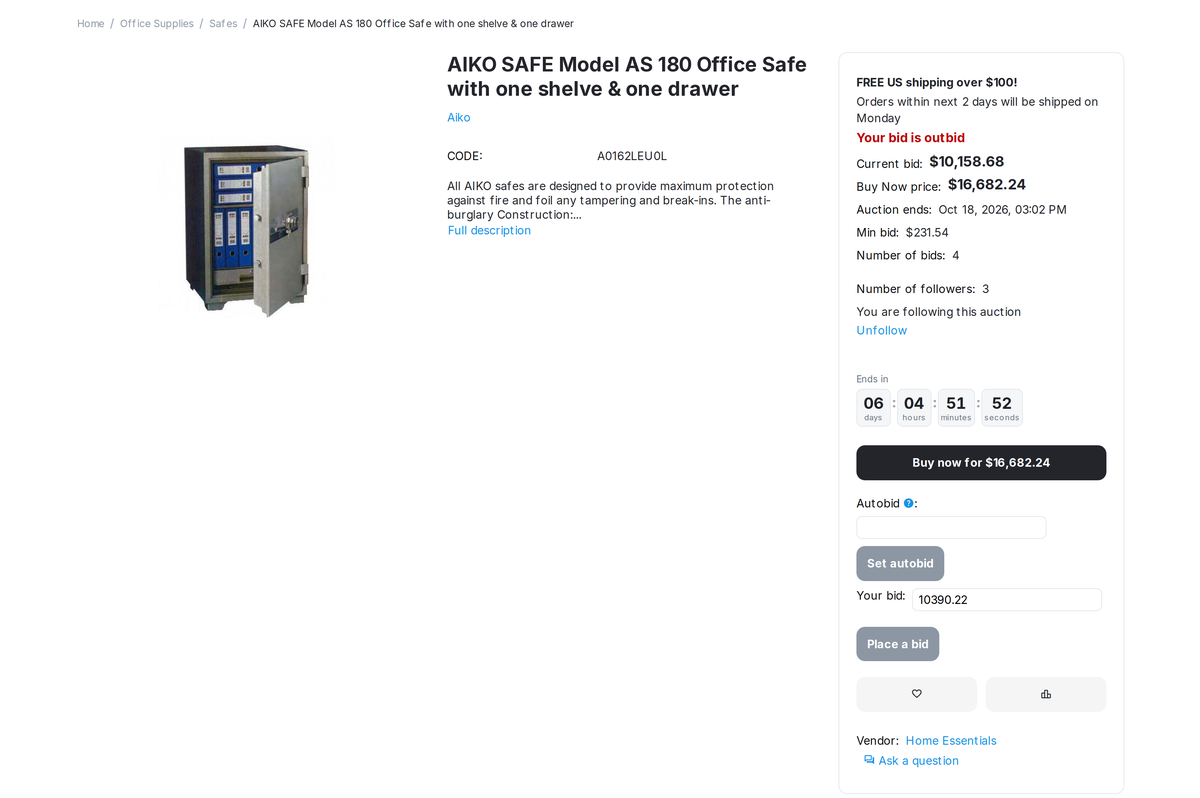
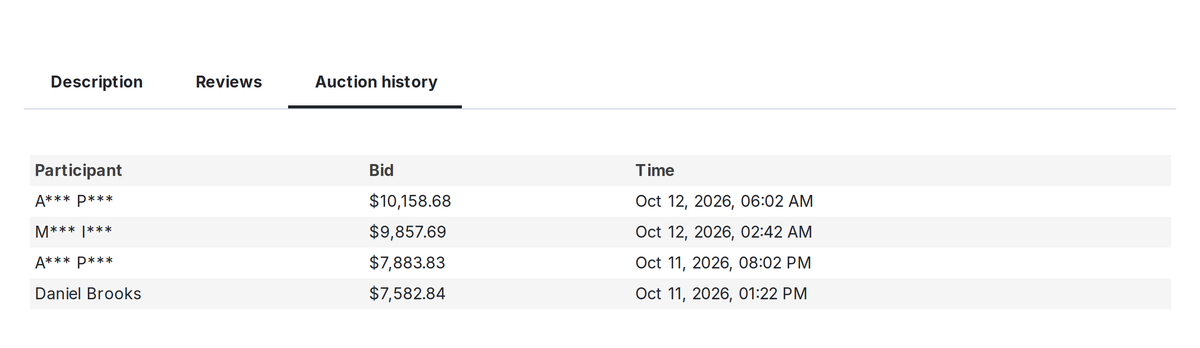
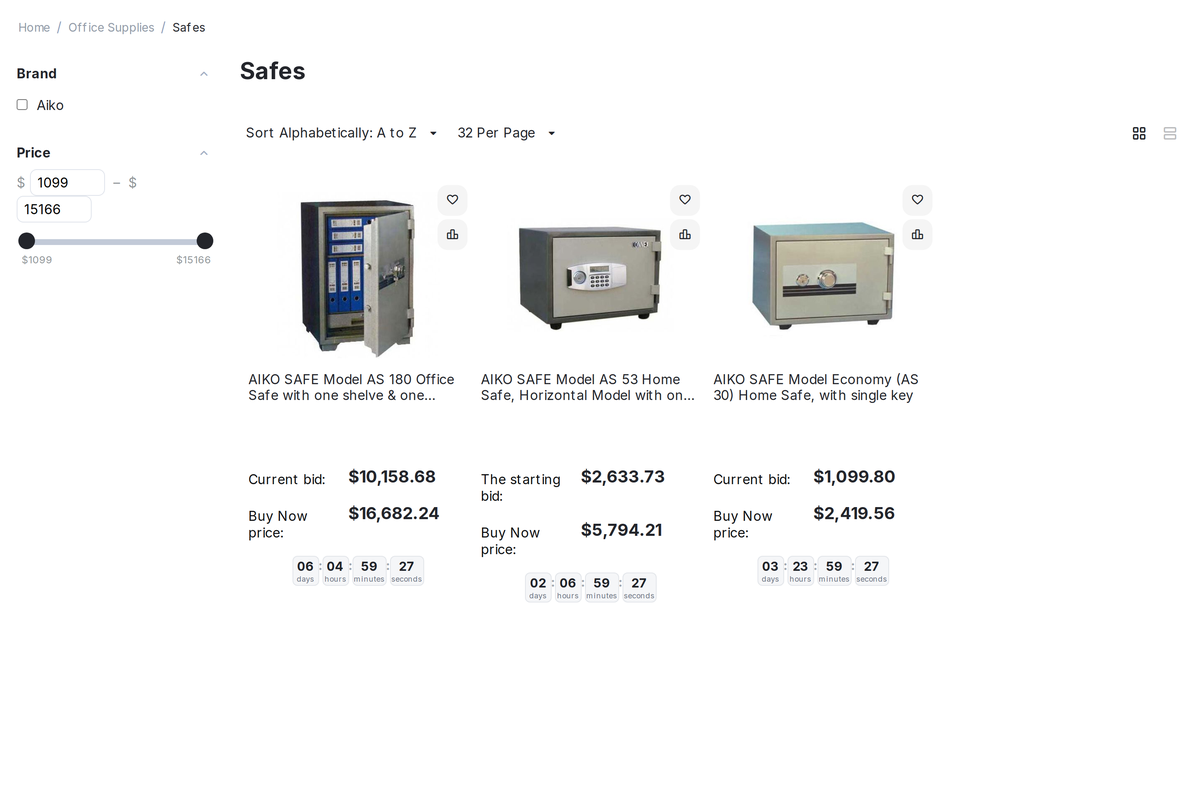
An auction suits a product whose price is better learned from customers: collectibles, rare items, discounted goods and leftovers. The customer sees the current bid, the time left and the bid history - and comes back to outbid the rival.
Bids set the price
The start price, the bid step and the reserve price are set for every lot; then the customers raise the price. |
Customers come back
The countdown, following a lot and emails about new bids bring the participant back to the page. |
No manual work
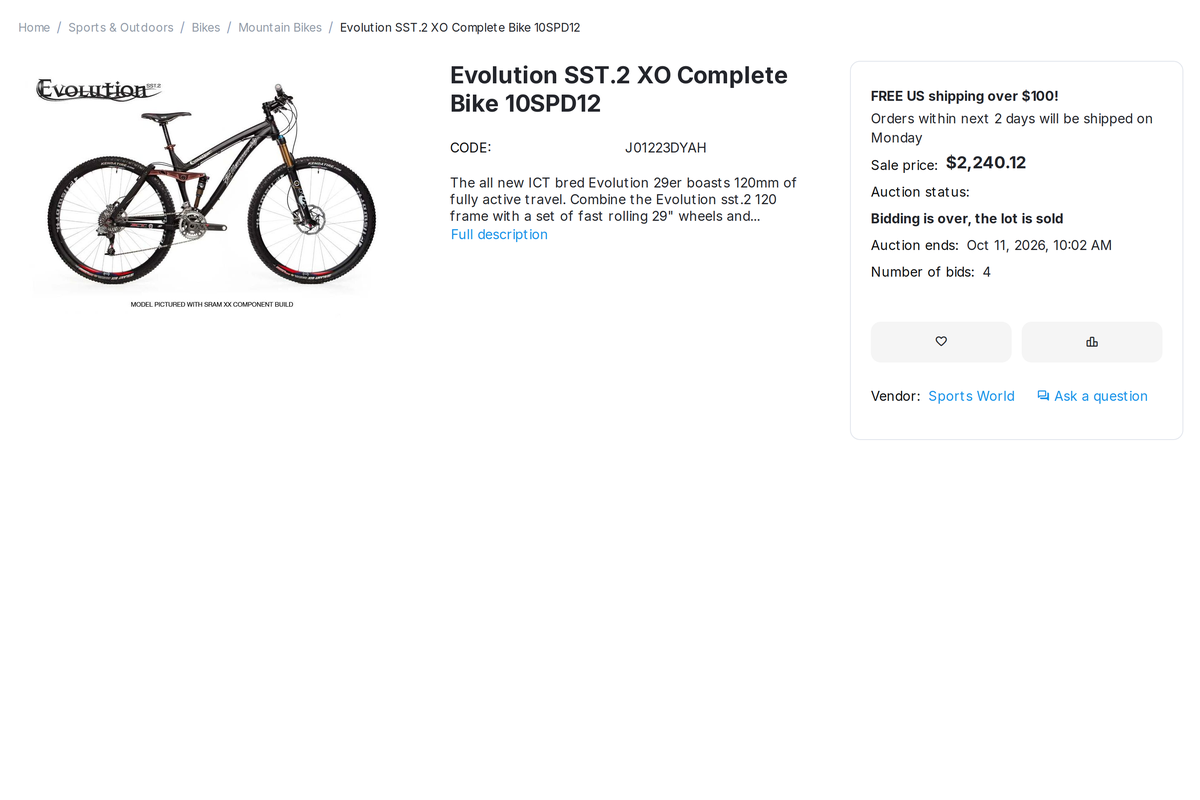
Auctions start and end on schedule by cron, and the winner gets a payment link by email. |
Fair bidding
An automatic bid raises the price exactly one step above the rival, a manual bid above another customer's automatic bid leads at once, and a bid in the last minutes extends the auction. |
How do auctions start and end?
An auction starts and ends on schedule: the store sets up cron for that - the two commands are in the add-on settings. A running lot also ends when its page is opened after the end time.
What if a customer bids in the last second?
With the "Extend auction" setting on, a bid in the last minutes extends the auction, and other participants have time to answer.
How does an automatic bid work?
The customer sets the maximum they are ready to pay. The add-on bids exactly one step above the rival and stops at the maximum. The rival sees only the current price.
Can anyone but the winner buy the lot?
No. Only the winner adds the won lot to the cart by their own link. The link is valid for the number of days in the "Lifetime of the key for purchasing a lot (days)" setting, 45 by default.
Does the add-on work on a marketplace?
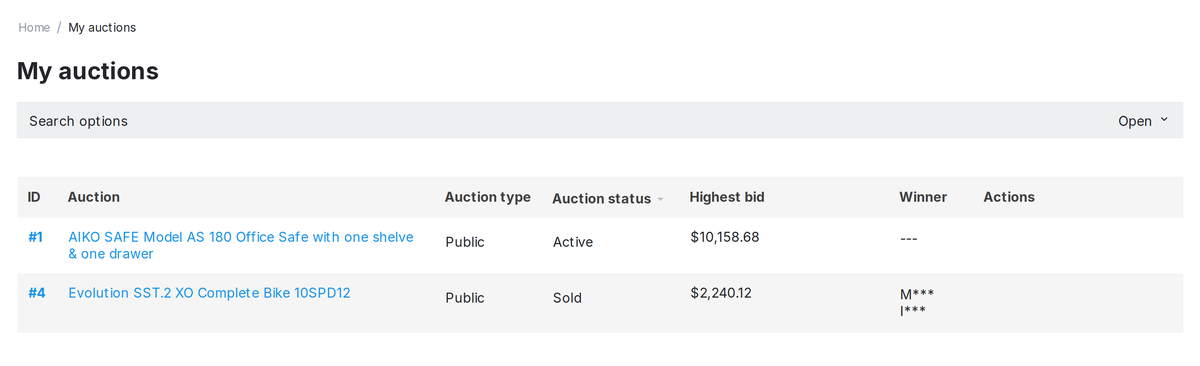
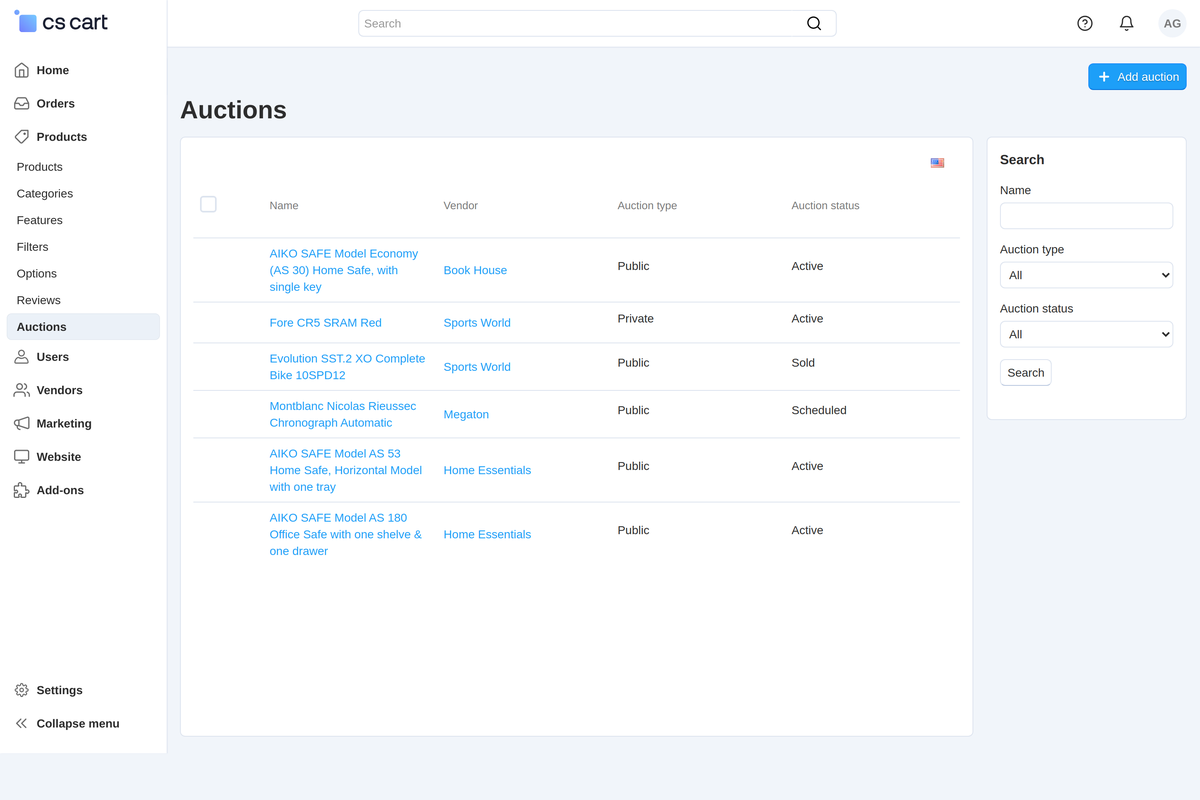
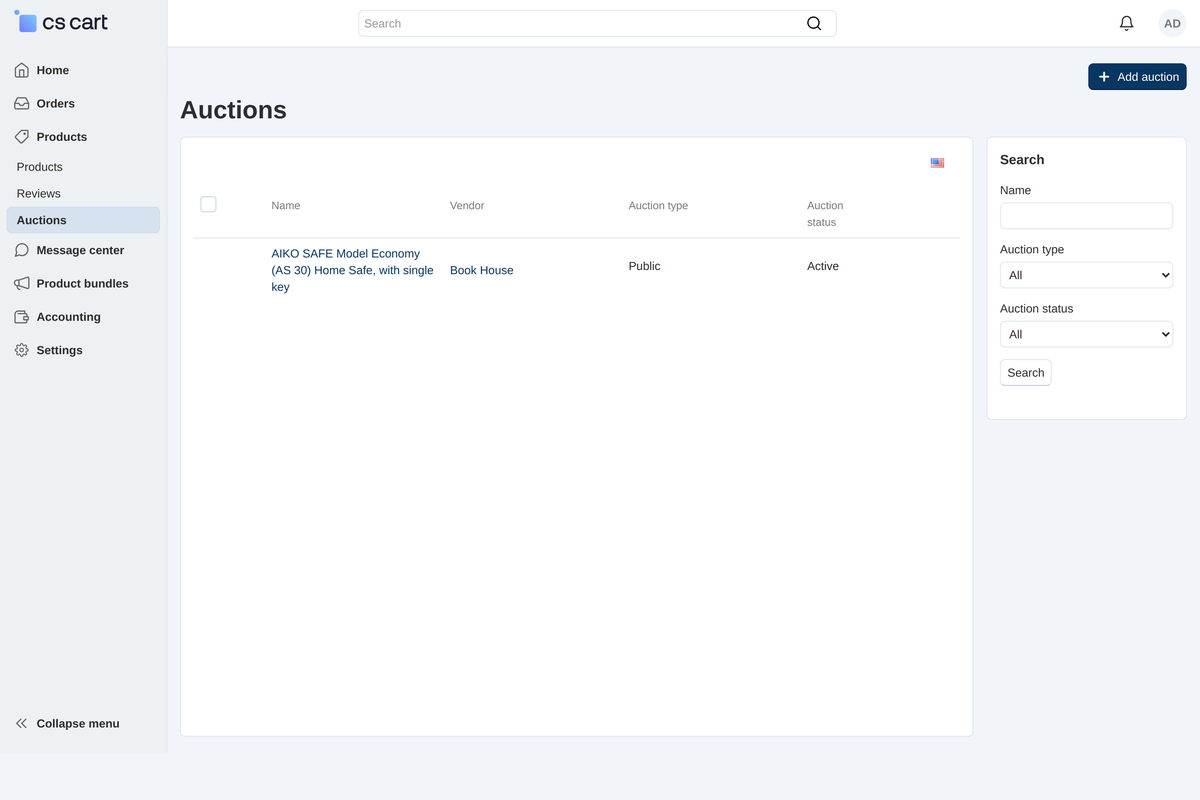
Yes, on Multi-Vendor vendors run auctions of their own products. The administrator decides which auction types they can use and sets date and price limits.
What does the add-on not do?
It does not take bids from guests - signing in is required. Without cron it does not start scheduled auctions and does not send queued emails. It does not reserve a lot on Buy now until payment: the auction ends when the order is placed. The PDF report needs the core "PDF Documents" add-on. Search add-ons with their own index sort and filter lots by the product price, not by the bid.
How much is the add-on?
$250 per store licence. The licence is bound to the domain; updates come through the "Cart-Power: Add-ons Manager" add-on and the CS-Cart Upgrade Center.
What happens when upgrading from 2.2 or 2.3?
Auctions, bids, invitations and settings stay. When upgrading from 2.2, the settings of 2.3 keep the previous behavior: there is no highest allowed bid, and vendors can bid on their own lots; turn on the limit and the ban when you are ready. We recommend turning on "Extend auction".
|
CS-Cart development · in-house team · since 2013 We build, upgrade and speed up CS-Cart stores and marketplacesAnalysts, developers, designers, QA and support under one roof — no subcontractors. We ship add-ons you can buy on this page today, and we take on the work that no ready-made add-on covers. |
|
2013 Working with |
4.98 Rating from |
200+ Solutions on this |
500+ E-commerce projects |
Flagship products
Everything else we publish improves one screen. These two change the numbers: how customers find products, and how often they come back.
|
Add-on · Search & merchandising Smart SearchElasticsearch-powered search for large catalogues. The customer types two letters, sees products with images and prices, and buys from the dropdown — even after a typo or with the wrong keyboard layout. Visitors who use the search bar are 24% of traffic and 44% of revenue, and convert about 2.5× better than people who only browse categories. If search returns nothing, up to 80% of them leave. | ||||||||
| ||||||||
Try it on a live catalogue: open the demo store and search with a deliberate typo. |
|
Add-on · Mobile commerce PowerApp — mobile app for your storeA native iOS and Android app running on your CS-Cart data: the same products, prices, stock, promotions, reward points and orders. There is no second catalogue to maintain — everything stays in the admin panel you already use. A mobile site brings a customer in once; an app brings them back for free. Push notifications replace the retargeting budget you spend to buy the same customer a second time. | ||||||||
| ||||||||
Screens, block types and pricing tiers: see how the app is built. |
Services
Fixed scope, written specification, a named project manager and a warranty on what we ship.
|
Custom CS-Cart development Functionality the platform does not have: add-ons, marketplace mechanics, integrations with 1C, CRM, ERP, payment and delivery providers. We start from a written specification, not from an estimate on a phone call. Details → |
|
CS-Cart upgrade Move to the current version without losing data, custom code or add-ons. We audit every modification first, upgrade on a staging copy, adapt what breaks and switch over with little or no downtime. Details → |
|
Speed and performance optimisation Conversion falls by about 4.4% for every extra second of load time. We profile the server, the database and the front-end, then fix what actually costs the seconds — and show you the before-and-after numbers. Details → |
|
Design for CS-Cart Mobile-first storefront design built on CS-Cart's own template structure, so the layout survives the next platform upgrade instead of becoming a migration problem. Details → |
|
SEO for CS-Cart A technical audit of indexing, duplicates, redirects, structured data and Core Web Vitals — delivered as a prioritised fix list your developers can act on, or that we implement ourselves. Details → |
How we work
|
Before we start We discuss the goal, offer options and write the specification. You approve scope and price before development begins. |
While we build A named project manager reports progress on a fixed schedule. You always know what is in work and what is next. |
|
Before release A separate QA pass on every release — the developer who wrote the code is not the person who signs it off. |
After handover Documentation for everything we ship, plus a warranty on the modifications and the project. |
Tell us what the store needs to doDescribe the task in a couple of sentences and we will come back with options, a scope and a price. The consultation is free, and we will say plainly if a ready-made add-on already solves it.
|
Client cases, our full add-on catalogue and 184 customer reviews are in the tabs above.


